
Top Scientists Recognized
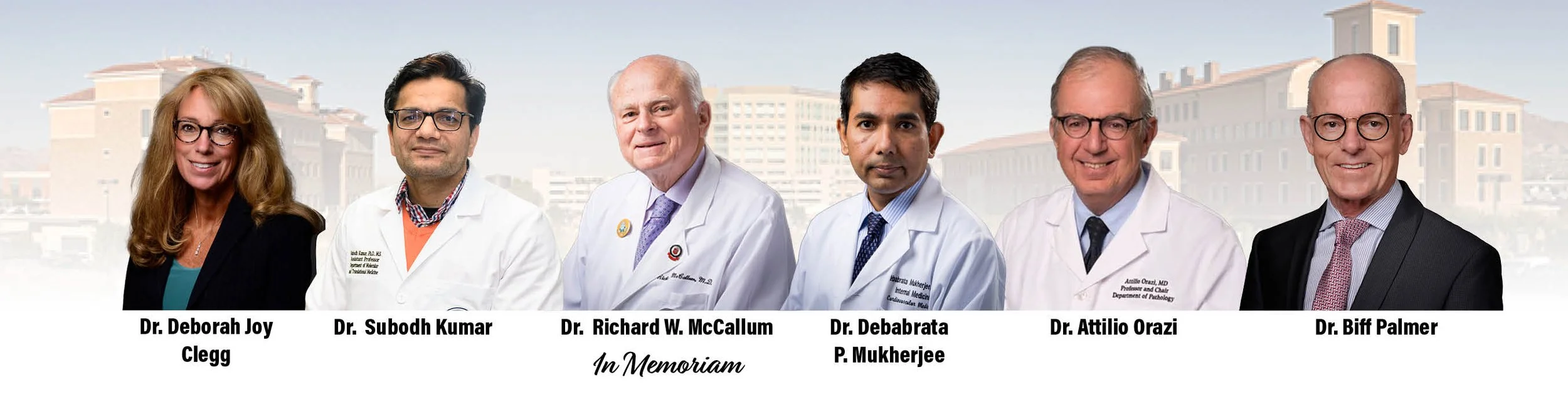
Six Texas Tech Health El Paso Researchers Rank Among the World's Top 2% of Scientists
Six Texas Tech Health El Paso faculty members appear on the Stanford-Elsevier Top 2% Scientists List, an annual bibliometric ranking developed by Stanford University researcher John P.A. Ioannidis and colleagues to measure research citation impact across 22 scientific fields.
The researchers represent a range of specialties, yet their work shares a common purpose: improving and extending quality of life for Borderplex communities. Their focus areas, which include diabetes, heart disease, and cancer, are conditions that disproportionately affect the region, making world-class research into these diseases not just a scientific pursuit, but a direct investment in the health and future of El Paso and its neighbors.
Deborah Joy Clegg, Ph.D., the university’s vice president for research and a professor of internal medicine, spent three decades demonstrating that metabolism findings from studies of men often did not apply to women. The National Institutes of Health eventually agreed. Her foundational research contributed to a federal mandate requiring sex to be included as a biological variable in NIH-funded studies. Her citation count exceeds 31,600. She came to El Paso to apply the same research framework to Hispanic women in the Borderplex.
Biff F. Palmer, M.D., professor of internal medicine and medical education, received the American Society of Nephrology's premier award for contributions to nephrology education, the Robert G. Narins Award, in November 2025. He has authored more than 310 peer-reviewed articles and book chapters. His most-cited work, a study on obesity co-authored with Clegg, has been widely cited by other researchers.
Debabrata Mukherjee, M.D., chair of internal medicine and chief of cardiovascular medicine, has published more than 500 studies and has accumulated more than 113,600 citations. His research focuses on generic therapies that achieve outcomes comparable to those of expensive branded medications, a question with direct consequences in a community where many patients cannot afford branded drugs.
Attilio Orazi, M.D., FRCPath, chair of pathology, collaborated with the World Health Organization to develop blood cancer classification systems now used in clinical practice worldwide.
Subodh Kumar, Ph.D., received a 2025 Marsh Foundation grant to study Alzheimer's disease biomarkers in Hispanic patients, a population so underrepresented in existing research that, as Kumar describes it, the scientific basis for early diagnosis in this community remains essentially incomplete.
The list also includes the late Richard W. McCallum, M.D., FRACP, who, after joining the institution in 2009, founded and built the university’s internal medicine department from the ground up. In the years that followed, he became one of the most published figures in gastroenterology, with more than 600 journal articles, 150 book chapters, and 18 textbooks — while securing more than $8 million in NIH funding. His pioneering work on gastric electrical pacing provided approximately 4,000 patients per year with a procedural option for severe gastroparesis. Dr. McCallum passed away in 2025. The research culture he built did not.
This fall, the university's researchers will begin mentoring the first biomedical doctoral students in the history of Far West Texas. Texas Tech Health El Paso's Francis Graduate School of Biomedical Sciences has enrolled an inaugural cohort of five students, with concentrations in diabetes, cancer, infectious disease, and neurological conditions. Plans call for scaling to 30 to 35 doctoral students within five years.
About Texas Tech Health El Paso
Texas Tech Health El Paso serves 108 counties in West Texas and is dedicated to preparing the next generation of healthcare professionals. Established as an independent university in 2013, Texas Tech Health El Paso is a uniquely innovative destination for medical, nursing, biomedical sciences and dental education.
Focusing on excellence in health care education, research, and clinical service, Texas Tech Health El Paso has graduated over 2,600 professionals over the past decade. For more information, visit ttuhscepimpact.org.